30 Other Ways to Say “Have a Safe Trip” (With Examples)
Quick Answer: A warm all-purpose wish is, “Have a safe and happy journey—I hope everything goes smoothly and you arrive well.” It is one of the most thoughtful ways to wish someone a safe trip because it expresses care, comfort, and genuine concern. You can also choose a more personal, professional, or travel-specific message.
Finding different ways to say have a safe trip helps you make a farewell feel more personal. Although the original expression is perfectly polite, repeating it in every conversation, text, or email can make your message sound routine. A thoughtful alternative can better reflect your relationship with the traveler and the type of journey they are taking.
Whether someone is catching an international flight, setting off on a family road trip, traveling for business, or returning home after a long vacation, the right words can make them feel appreciated. If you are wondering how to say have a safe trip without sounding repetitive, you have plenty of natural options.
This guide shares 35 unique expressions organized by travel situation and communication style. You will find another way to say have a safe trip for friends, relatives, colleagues, and loved ones, along with practical examples showing when each expression works best.
What Does “Have a Safe Trip” Mean?
“Have a safe trip” is a friendly farewell expression used to wish someone safety, comfort, and well-being while traveling. It communicates that you care about the person’s journey and hope they reach their destination without problems.
The expression can be used before almost any type of travel, including:
- Air travel: Wishing someone a safe and comfortable flight.
- Road trips: Expressing concern for someone driving a long distance.
- Train journeys: Wishing someone a comfortable and uneventful ride.
- International travel: Showing care for someone traveling abroad.
- Return journeys: Hoping someone arrives home safely after visiting another place.
When searching for have a safe trip synonyms or safe travels synonyms, you will find expressions that emphasize different parts of the experience. Some focus on physical safety, others on comfort, enjoyment, or the emotional connection between the speaker and traveler.
For example, “Bon voyage” is a cheerful traditional farewell, while “Text me when you land” expresses personal concern about someone’s arrival. “Drive safe” is more appropriate for someone traveling by car.
There is also a small grammatical point worth understanding. “Safe travels” is a conventional farewell wish, not an incorrect sentence fragment. It uses a plural noun phrase as a complete social expression, much like “Good luck” or “Best wishes.” It is perfectly natural to say it independently when someone is leaving.
If you need another way to say safe journey, consider the relationship between the words and the situation. “Have a safe journey” is a complete, straightforward wish, while “May your journey be a safe one” sounds slightly more heartfelt and traditional.
The best expression is the one that communicates your genuine concern without sounding forced or overly formal.
Is “Have a Safe Trip” Professional or Polite to Say?
Yes. “Have a safe trip” is both polite and professional. It is appropriate for friends, family members, coworkers, managers, clients, business partners, and other professional contacts.
The expression is neutral enough to work in most situations. However, you can adjust your wording depending on the relationship and the purpose of the journey.
- For friends: “Have an amazing trip! Stay safe and send me pictures.”
- For family: “Have a safe journey. We’ll be thinking of you until you get home.”
- For coworkers: “Wishing you a safe and productive trip.”
- For clients: “I hope you have a comfortable journey and a successful visit.”
- For a manager: “Wishing you a safe journey and a pleasant stay.”
If you are wondering how to say have a safe trip professionally, remember that a business message should be courteous, concise, and appropriate for the relationship. Avoid overly emotional expressions or slang unless you already have a relaxed relationship with the recipient.
You do not need complicated vocabulary to sound professional. A simple, sincere message is usually more effective than an unnecessarily elaborate farewell.
Quick Top Picks: The 8 Best Alternatives at a Glance
If you need something suitable for a particular situation, these eight expressions are excellent starting points. Each offers a slightly different tone while keeping the message natural and thoughtful.
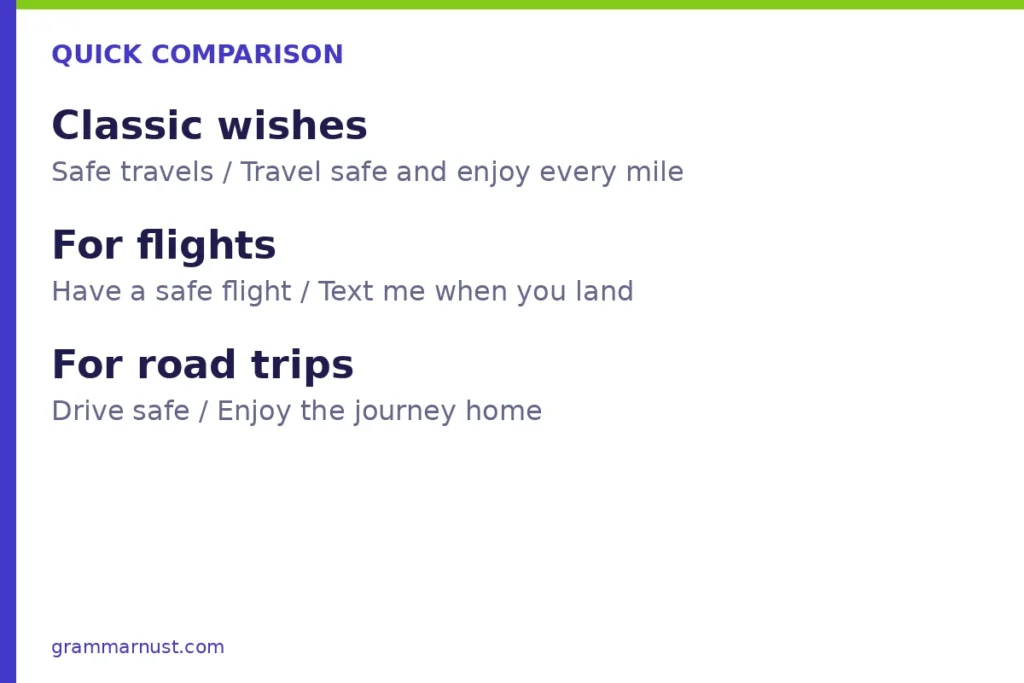
- Safe travels: A versatile farewell suitable for almost any type of journey.
- Bon voyage: A cheerful and stylish way to wish someone a good trip.
- Have a safe flight: A specific wish for someone traveling by airplane.
- Text me when you land: A personal message showing that you care about their arrival.
- Drive safe: A short, friendly expression for someone traveling by car.
- Have a safe trip back: A thoughtful expression for someone returning from a visit.
- Wishing you a safe and productive trip: A professional option for business travel.
- Happy travels! A cheerful, informal farewell for friends and family.
The detailed alternatives below explain how to use each expression, what tone it communicates, and how to adapt it to different travel situations.
Classic All-Purpose Safe-Trip Wishes
These expressions work for different types of travel and relationships. They are suitable for spoken conversations, farewell messages, greeting cards, and everyday communication. Choose one when you want to express general goodwill without focusing on a particular mode of transportation.
1. Safe travels
Tone and use: Friendly, simple, and universally appropriate. “Safe travels” is one of the most natural alternatives because it works for flights, road trips, train rides, and international journeys. It is short enough for everyday conversations but polite enough for professional communication.
Example: I hope you have an incredible vacation in Spain. Safe travels, and enjoy every moment!
2. Bon voyage
Tone and use: Cheerful, elegant, and slightly traditional. This French expression means “good journey” and is commonly used as a farewell when someone is leaving for a trip. It works especially well for vacations, international travel, and farewell cards. You can learn more about the expression in Merriam-Webster’s definition of bon voyage.
Example: Bon voyage, Sarah! I hope your European adventure is everything you’ve been looking forward to.
3. Have a safe journey
Tone and use: Polite, warm, and slightly more traditional than “safe travels.” This expression is suitable for nearly any traveler, including friends, relatives, coworkers, and professional acquaintances. It emphasizes reaching the destination safely without making assumptions about the transportation method.
Example: Have a safe journey to Chicago, and I hope everything goes smoothly along the way.
4. May your journey be a safe one
Tone and use: Thoughtful, heartfelt, and somewhat formal. This expression sounds more personal because it communicates a genuine hope for the traveler’s well-being. It is especially suitable for farewell cards, meaningful conversations, and messages to people you care deeply about.
Example: May your journey be a safe one, and may you find plenty of wonderful experiences waiting at your destination.
5. Wishing you safe travels
Tone and use: Warm, courteous, and professional. Unlike the shorter farewell “Safe travels,” this version sounds like a complete personal wish. It is a good choice for emails, greeting cards, workplace messages, and conversations with people you may not know very closely.
Example: Wishing you safe travels as you head to your conference in New York next week.
6. Have a safe and happy journey
Tone and use: Positive, affectionate, and encouraging. This expression combines concern for someone’s safety with a wish that they enjoy the experience. It is particularly appropriate for family members, close friends, and people embarking on an exciting vacation or important personal journey.
Example: Have a safe and happy journey, everyone! I hope you make beautiful memories during your family vacation.
For Flights: Wishes for Someone Traveling by Air
When someone is getting ready to board an airplane, you can choose more specific ways to say have a safe flight. These expressions acknowledge the flight itself, the landing, or the importance of letting someone know they have arrived. They work particularly well in text messages and conversations before departure.
7. Have a safe flight
Tone and use: Direct, caring, and universally understood. This is the most straightforward expression for someone traveling by airplane. It is appropriate for friends, family members, coworkers, and professional contacts. You can use it before a short domestic flight or a long international journey.
Example: Have a safe flight to London! I hope you get some rest and enjoy the trip.
8. Text me when you land
Tone and use: Personal, casual, and caring. This expression communicates that you want to know when the traveler reaches their destination. It is especially suitable for close friends, partners, siblings, and family members. It also gives the recipient a simple way to reassure you after arriving.
Example: Text me when you land so I know you made it safely. Have a wonderful time in California!
9. Let me know when you arrive safely
Tone and use: Thoughtful, polite, and slightly more formal than asking someone to text you. It works for people traveling alone, elderly relatives, close friends, or colleagues with whom you have a friendly relationship. The wording makes your concern clear without sounding demanding.
Example: Let me know when you arrive safely in Boston. I hope the flight is comfortable and everything goes according to plan.
10. Wishing you a smooth flight and an easy landing
Tone and use: Warm, considerate, and flight-specific. This expression goes beyond general safety by wishing someone a comfortable flight and an uncomplicated arrival. It is particularly suitable for people who dislike flying or are preparing for a long journey with connecting flights.
Example: Wishing you a smooth flight and an easy landing. I hope the weather cooperates throughout your journey!
11. Enjoy your flight
Tone and use: Friendly, relaxed, and positive. This expression focuses on the traveler’s experience rather than safety alone. It works particularly well when someone is excited about their destination, traveling for vacation, or taking a flight they have been looking forward to.
Example: Enjoy your flight to Miami! I hope you have a relaxing journey and an unforgettable vacation.
When someone sends you a message after landing, a relieved response can be just as thoughtful. You might say, “Thank God you made it safely!” If you want more natural expressions for that moment, see our guide to other ways to say “Thank God”.
For Road Trips and Driving
Someone traveling by car may appreciate a message that acknowledges the road, driving conditions, and the importance of taking breaks. These expressions are particularly useful for friends, family members, and coworkers setting off on long-distance drives.
12. Drive safe
Tone and use: Short, casual, and caring. This is one of the most common expressions used when someone is getting behind the wheel. Although “drive safely” is the more traditional adverbial construction, “drive safe” is widely accepted in everyday informal English.
Example: Drive safe, and give yourself plenty of time to get there. I’ll see you tomorrow!
13. Take care on the road
Tone and use: Warm, thoughtful, and conversational. This expression is appropriate for anyone driving, especially someone facing a long journey or unfamiliar roads. It communicates concern without sounding overly serious or dramatic.
Example: Take care on the road, and don’t hesitate to stop if you need a break during the drive.
14. Wishing you clear roads and smooth driving
Tone and use: Friendly, encouraging, and slightly more descriptive. This expression is especially suitable for long-distance road trips, holiday travel, and journeys during busy traffic periods. It communicates a wish for both safe driving conditions and a comfortable experience.
Example: Wishing you clear roads and smooth driving on your trip to Colorado. I hope you avoid all the holiday traffic!
15. Keep safe behind the wheel
Tone and use: Caring, practical, and slightly more serious. This expression emphasizes responsible driving and personal safety. It works well for relatives, teenagers who have recently started driving, friends, and anyone embarking on a particularly long trip.
Example: Keep safe behind the wheel, especially during the evening drive. We can’t wait to see you this weekend.
16. Enjoy the road trip — and take breaks
Tone and use: Relaxed, supportive, and practical. This expression combines excitement about the trip with a gentle reminder to drive responsibly. It is particularly suitable for friends or family members planning a vacation that involves several hours on the road.
Example: Enjoy the road trip — and take breaks whenever you need them. Stop at some interesting places and send us pictures!
For the Trip Home: Return-Journey Wishes
Wishing someone well on their return journey is just as thoughtful as saying goodbye when they leave. Whether a friend is finishing a vacation, a relative is visiting for the weekend, or a colleague is returning from a business trip, these expressions acknowledge that the journey home matters too.
17. Have a safe trip back
Tone and use: Natural, friendly, and versatile. This is an excellent expression when someone is leaving your home, workplace, or city to return to their own destination. It works in both personal and professional situations without sounding overly formal.
Example: It was wonderful having you here this weekend. Have a safe trip back to Seattle!
18. Safe travels home
Tone and use: Warm, concise, and thoughtful. This expression specifically acknowledges that someone is traveling home rather than beginning a new vacation or business trip. It works well in spoken farewells, text messages, and cards.
Example: We had such a great time together. Safe travels home, and let’s plan another visit soon!
19. Have a safe journey home
Tone and use: Polite, caring, and slightly more formal. This expression is particularly appropriate after hosting guests, attending an event, or spending time with someone who lives far away. It emphasizes the hope that their return journey is comfortable and uneventful.
Example: Thank you for joining us for the celebration. Have a safe journey home, and we hope to see you again soon.
20. Come back to us safely
Tone and use: Deeply affectionate and emotional. This expression communicates that someone’s presence matters and that you are looking forward to seeing them again. It is best suited to close family members, romantic partners, and dear friends rather than formal business relationships.
Example: We are going to miss you while you’re away. Come back to us safely, and remember that we’ll be counting the days until you return.
Once your loved one arrives home, you can continue the warm conversation with an appropriate greeting. Our guide to other ways to say “Welcome Back” offers more ideas for making their return feel special.
Warm and Heartfelt: For Family and Close Friends
When someone you love is traveling, a simple farewell may not fully express how much you care. You might want to communicate affection, encouragement, or even a heartfelt blessing. If you are searching for another way to say safe travels to a friend, these expressions offer more emotional warmth than a standard goodbye.
Choose an expression that reflects your relationship and the recipient’s personality. Religious language, emotional messages, and affectionate phrases are most effective when they feel natural to both people.
21. Traveling mercies
Tone and use: Traditional, heartfelt, and faith-oriented. “Traveling mercies” is commonly used as a blessing or prayer for someone’s protection during a journey. It is particularly suitable for religious families, close friends, and people who appreciate spiritual expressions of encouragement.
Example: Traveling mercies to you and your family as you make your way across the country. May everything go smoothly!
22. Godspeed
Tone and use: Traditional, poetic, and encouraging. This expression is an old-fashioned farewell that conveys wishes for a person’s success and well-being. It can sound formal or ceremonial, making it suitable for meaningful departures, major life changes, and special occasions.
Example: Godspeed, my friend. May this new adventure bring you happiness, wonderful opportunities, and safe passage.
23. Stay safe out there — we’ll be thinking of you
Tone and use: Affectionate, reassuring, and conversational. This message combines a practical safety wish with an emotional reminder that the traveler is loved and remembered. It works especially well for close friends and relatives going away for an extended period.
Example: Stay safe out there — we’ll be thinking of you every day until you get back from your trip.
24. Go safely, and hurry back to us
Tone and use: Loving, playful, and slightly sentimental. This expression communicates that you are excited for the person’s experience but will miss having them around. It is particularly suitable for family members, close friends, and romantic partners.
Example: Go safely, and hurry back to us! The house won’t feel the same without you here.
25. Sending you off with love and prayers for a safe trip
Tone and use: Deeply personal, supportive, and spiritual. This expression is appropriate when you want to communicate genuine affection and offer a blessing before someone leaves. It works particularly well in handwritten cards, family messages, and emotional farewells.
Example: Sending you off with love and prayers for a safe trip. May every part of your journey be peaceful, and may you return with beautiful memories.
Professional and Polite: For Colleagues and Work Trips
Business travel often involves conferences, client meetings, company events, training sessions, and international assignments. In these situations, a farewell should communicate courtesy and professionalism without becoming unnecessarily formal.
If you need to know how to say have a safe trip professionally, consider these expressions for emails, workplace conversations, team messages, and business correspondence. They acknowledge the person’s travel while maintaining an appropriate professional tone.
26. Wishing you a safe and productive trip
Tone and use: Professional, courteous, and encouraging. This is an excellent choice for colleagues, managers, business partners, and employees traveling for work. It combines a safety wish with a positive message about the purpose of the journey.
Example: Wishing you a safe and productive trip to the annual conference. I hope the meetings are successful and the journey goes smoothly.
27. Have a safe trip, and we look forward to your return
Tone and use: Respectful, polished, and welcoming. This expression works well when addressing a colleague or manager who will be away from the office. It communicates professional goodwill while making it clear that their return is anticipated.
Example: Have a safe trip, and we look forward to your return. Please let the team know if you need anything before departure.
28. Safe travels — we’ll hold things down here
Tone and use: Friendly, supportive, and collegial. This expression is particularly appropriate for close coworkers and team members who have an informal working relationship. It reassures the traveler that their responsibilities will be managed while they are away.
Example: Safe travels to the client meeting! We’ll hold things down here and make sure everything stays on schedule.
29. Travel safely, and let us know if you need anything
Tone and use: Considerate, professional, and supportive. This phrase is useful when communicating with employees, clients, or colleagues who may need assistance during their journey. It combines a straightforward farewell with an offer of practical support.
Example: Travel safely, and let us know if you need anything while you’re attending the training program in Denver.
Short Lines for Texts, Cards and Posts
Sometimes a long message is unnecessary. A short farewell can communicate warmth just as effectively, especially in a text, social media caption, greeting card, or quick conversation before departure.
If you are wondering what to say instead of safe travels, think about the mood you want to create. If you are asking what can i say instead of safe travels in a casual text, a cheerful or playful expression may be more appropriate than a formal travel wish. These options also give you another way to say safe travels without repeating the same message every time.
30. Happy travels!
Tone and use: Cheerful, friendly, and upbeat. This short expression is ideal for social media posts, text messages, and casual farewells. It focuses on the positive experience ahead and works particularly well for someone going on vacation or exploring a new destination.
Example: Happy travels, Emily! Have the best time exploring all those beautiful places.
31. Smooth sailing!
Tone and use: Lighthearted, optimistic, and conversational. Although the expression originated in a nautical context, it is commonly used figuratively to wish someone an easy and trouble-free experience. It works especially well for casual messages and playful farewells.
Example: You’ve got everything packed and ready to go. Smooth sailing, and enjoy your vacation!
32. Fair winds!
Tone and use: Poetic, adventurous, and slightly nautical. This expression traditionally evokes favorable sailing conditions and can serve as a distinctive farewell for someone embarking on an adventure. It is especially appropriate for sailing enthusiasts or people who enjoy maritime language.
Example: Fair winds, Alex! May your sailing adventure bring you beautiful views and unforgettable memories.
33. Adventure awaits — travel safe!
Tone and use: Exciting, encouraging, and energetic. This expression combines enthusiasm for the destination with a genuine wish for the traveler’s safety. It is particularly suitable for vacations, outdoor adventures, international trips, and social media captions.
Example: Adventure awaits — travel safe! I can’t wait to see all the amazing pictures from your backpacking trip.
34. Off you go — stay safe!
Tone and use: Playful, affectionate, and informal. This expression works well when saying goodbye to someone you know closely. It has a lighthearted feel while still communicating genuine concern for their well-being.
Example: Off you go — stay safe! Don’t forget to call us when you reach the hotel.
35. Have the best trip!
Tone and use: Enthusiastic, positive, and friendly. This expression focuses on the traveler’s enjoyment rather than explicitly mentioning safety. It is particularly suitable for vacations, celebrations, and exciting personal journeys. You can add a separate safety wish if you want to emphasize both ideas.
Example: Have the best trip! Make the most of every day, take plenty of pictures, and enjoy your time away.
Which One Should You Use? A Quick Guide
Choosing the right travel wish depends on the destination, transportation method, relationship, and communication style. A close friend boarding an international flight may appreciate something more personal than a colleague receiving a short business email.
Use the following table to match your message to the traveler’s situation.
| Situation | Best wish | Why it works |
|---|---|---|
| Friend flying abroad | Text me when you land. | It expresses personal concern and gives your friend an easy way to confirm their arrival. |
| Coworker on a work trip | Wishing you a safe and productive trip. | It combines professional courtesy with encouragement for a successful business journey. |
| Family setting off on a road trip | Enjoy the road trip — and take breaks. | It communicates excitement while encouraging responsible driving during a long journey. |
| Loved one traveling home | Have a safe trip back. | It acknowledges the return journey and expresses care about their arrival. |
| A short text or card | Happy travels! | It is brief, cheerful, and appropriate for casual messages and travel announcements. |
One final consideration: Think about what the recipient would appreciate hearing. Some people prefer a simple “Safe travels,” while others enjoy a more personal message that mentions their destination, the reason for traveling, or how much you look forward to seeing them again.
Mistakes to Avoid When Wishing Someone a Safe Trip
Even a thoughtful farewell can feel repetitive or inappropriate when the wording does not match the situation. Keep these common mistakes in mind when choosing your message.
- Repeating “safe travels” for every leg of the same trip: If someone is taking several connecting flights or traveling through multiple destinations, repeating the same farewell can sound mechanical. Personalize your messages instead. For example, say “Have a smooth flight to Paris” before departure and “Hope the train ride to Lyon goes well” for the next part of the journey.
- Using slangy casual lines in a formal work email: Expressions such as “Off you go,” “Fair winds,” or “We’ll hold things down here” may be perfectly appropriate among close coworkers but can sound too informal in correspondence with clients, senior managers, or professional contacts. Choose a polished expression such as “Wishing you a safe and productive trip.”
- Saying “have a safe flight” to someone who is driving: Always consider the person’s transportation method. If someone is traveling by car, “Drive safe” or “Take care on the road” is more appropriate. For train travel, a general wish such as “Have a safe journey” works better.
- Forgetting to wish them well on the journey home: People often remember to send a message before someone leaves but overlook the return trip. A simple “Have a safe trip back” shows that you care about their entire journey, not just their departure.
- Making a message unnecessarily complicated: A travel wish does not need elaborate language to feel sincere. Long, overly emotional messages can sound unnatural when the relationship is casual. Choose a phrase that reflects how you normally communicate with the recipient.
- Using a safety wish when you really mean enjoyment: “Have a safe trip” emphasizes well-being, while “Have the best trip” focuses on enjoyment. If you want to communicate both, combine the ideas rather than assuming one automatically means the other.
The most effective farewell messages are specific, sincere, and appropriate for the person receiving them. A short sentence that reflects your relationship is often more meaningful than a long collection of travel-related expressions.
Taken together, these other ways to say have a safe trip cover every kind of journey, and the have a safe trip meaning stays the same in each one: you care about the traveler and want them to arrive safely, comfortably and in good spirits.

Frequently Asked Questions
What is the best way to wish someone a safe trip?
“Have a safe and happy journey” is an excellent all-purpose wish because it communicates both concern for someone’s safety and excitement about their experience. You can make it more personal by mentioning their destination or adding a line such as “Let me know when you arrive.” The best choice depends on your relationship with the traveler.
How do I say “have a safe trip” professionally in a work email?
You can write, “Wishing you a safe and productive trip,” or “I hope you have a comfortable journey and a successful visit.” Both expressions are courteous and appropriate for workplace communication. For a client or senior colleague, keep the message concise, respectful, and relevant to the purpose of the business trip.
What can I text someone instead of “safe travels”?
You can send “Text me when you land,” “Happy travels!” or “Enjoy the road trip — and take breaks.” If you are messaging a close friend, adding a personal detail makes the message more meaningful. For example, mention their destination or remind them that you are looking forward to hearing about their experience.
How do I wish someone a safe flight?
“Have a safe flight” is the simplest and most natural expression. You can also say “Wishing you a smooth flight and an easy landing” or “Text me when you land.” These messages are appropriate for friends, relatives, partners, and colleagues. If the person is nervous about flying, a reassuring and supportive message may be especially appreciated.
What do I say for a safe trip back home?
You can say “Have a safe trip back,” “Safe travels home,” or “Have a safe journey home.” These expressions are warm and appropriate when someone is returning from a vacation, family visit, or business trip. If you are particularly close to the person, you can add “We can’t wait to see you again when you get home.”
Is “safe travels” grammatically correct, and when should I use it?
Yes, “safe travels” is grammatically acceptable as a conventional farewell wish. It is a fixed social expression rather than a sentence that needs a subject and verb to function in conversation. Use it when someone is leaving for a vacation, business trip, road journey, flight, or other travel experience. It is suitable for both personal and professional situations.
Conclusion
Wishing someone a safe trip is a simple but meaningful way to show that you care about their well-being. Whether you choose “Safe travels,” “Bon voyage,” “Drive safe,” or a more heartfelt message, the best expression is one that feels natural for your relationship and the journey ahead.
Use specific wishes for flights and road trips, thoughtful messages for family and friends, and polished expressions for professional situations. Remember that a little personalization can make an ordinary farewell much more memorable. The next time someone you care about is traveling, choose one of these 35 alternatives to make your good wishes feel genuine, warm, and sincere.