30 Other Ways to Say “Welcome Back” (With Examples)
Quick answer: The warmest all-purpose way to say “welcome back” is “It’s so good to see you again!” It sounds friendly, sincere, and natural in both personal and professional conversations. For a workplace, school, or family reunion, you can choose a more specific greeting that recognizes the person’s return and makes them feel appreciated.
Looking for other ways to say welcome back without repeating the same familiar greeting? The right expression can make someone returning from vacation, medical leave, maternity leave, or a long trip feel genuinely appreciated. A thoughtful message also shows that you noticed their absence and are happy to reconnect.
However, the best greeting depends on your relationship with the person. A message to a returning coworker should sound different from one to your boss, a teacher, a student, or a close family member. Some situations call for professional warmth, while others allow for humor, affection, or excitement.
Below are 35 unique alternatives, organized by returning situation. Each expression includes a tone and usage explanation, along with a natural example you can use in an email, greeting card, text message, or everyday conversation.
What Does “Welcome Back” Mean?
“Welcome back” is a friendly expression used to greet someone who has returned after being away. It communicates happiness about seeing the person again and acknowledges their return to a familiar place, workplace, school, group, or relationship.
The word welcome can express a hospitable greeting or the pleasure of receiving someone’s presence. Adding “back” makes the greeting specific to someone returning rather than arriving for the first time.
For example, you might say “welcome back” to:
- A coworker returning after vacation or an extended absence.
- A student starting a new semester after summer break.
- A teacher returning for another school year.
- A friend coming home after traveling abroad.
- A family member returning after spending time away.
- An employee coming back to the office after maternity or other approved leave.
There are many welcome back synonyms and alternative expressions, but they communicate slightly different feelings. Some emphasize happiness, others highlight belonging, and some simply acknowledge that the person has returned.
For instance, “It’s good to see you again” is a versatile greeting, while “Your place at the table has been waiting” feels more personal and family-oriented. Similarly, “We’re ready to help you get back into the rhythm” is more suitable for a workplace than a casual reunion.
Choosing the right expression helps your message feel natural instead of repetitive or overly formal.
Is “Welcome Back” Professional or Polite to Say?
Yes. “Welcome back” is both professional and polite. It is appropriate for workplace conversations, business emails, employee announcements, school communications, and messages to managers or colleagues.
The expression is neutral enough for formal settings while still communicating warmth. You do not need an elaborate greeting every time someone returns. A simple, sincere message is often more effective than an overly enthusiastic or complicated one.
However, you should consider the recipient and the circumstances of their absence. A coworker returning from vacation might appreciate a casual greeting, while an employee returning after an extended absence may prefer a supportive message that does not draw unnecessary attention to personal circumstances.
For professional communication, a good greeting should:
- Recognize the person’s return without making assumptions about their experience.
- Sound friendly without becoming overly familiar.
- Show appreciation for their presence or contributions.
- Avoid unnecessary questions about private matters.
- Offer practical support when the person is returning to work or school.
For example, “It’s good to have you back. Please let me know if there’s anything you need as you get settled” is appropriate for most professional situations.
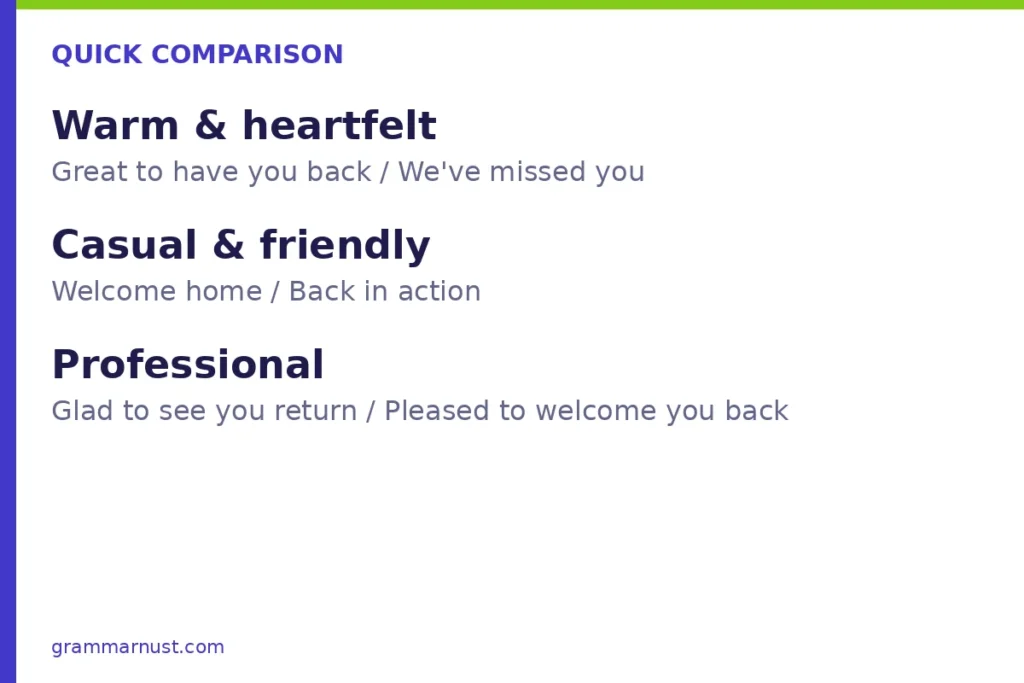
Quick Top Picks: The 8 Best Alternatives at a Glance
If you need a greeting quickly, these eight alternatives cover different situations and relationships. Each one is also explained in more detail in the sections below.
- General greeting: “It’s good to see you again.”
- Returning coworker: “The team is ready to help you get back into the rhythm.”
- Employee or professional contact: “We are pleased to welcome you back to the organization.”
- Returning traveler: “I hope the journey home was smooth.”
- Friend after vacation: “Tell me the best part of your trip when you’re ready.”
- Returning student: “Our classroom is ready for another year of learning with you.”
- Family member: “The house feels brighter now that you’re here.”
- Close friend: “Look who made it back to civilization!”
These expressions work because they recognize the person’s particular return rather than simply replacing “welcome” with another adjective.
Classic and Timeless Greetings
Some greetings work in almost any situation. They are warm, uncomplicated, and easy to use when you are unsure how formal or personal your message should be.
These alternatives are particularly useful when greeting acquaintances, friends, colleagues, neighbors, or people you have not seen in a while.
1. “It’s Good to See You Again.”
Tone: Warm, natural, and friendly.
This is one of the most versatile alternatives to “welcome back.” It communicates genuine happiness without sounding overly emotional. You can use it in person, in a text message, or in a professional email when someone returns after an absence.
Example: “It’s good to see you again! I hope everything has been going well since we last met.”
2. “We’ve Been Looking Forward to Your Return.”
Tone: Appreciative and enthusiastic.
This greeting is especially appropriate when someone has been expected back for a particular event, project, or occasion. It communicates that their presence matters and that people have anticipated seeing them again.
Example: “We’ve been looking forward to your return, and we’re excited to have you joining us for the next phase of the project.”
3. “Let’s Pick Up Right Where We Left Off.”
Tone: Relaxed, confident, and familiar.
This expression works well when you have an ongoing relationship, friendship, or project that paused while someone was away. It suggests that the connection has remained strong and that there is no need for an awkward restart.
Example: “It’s been a while, but let’s pick up right where we left off. We still have plenty to catch up on!”
4. “Your Presence Makes This Place Feel Familiar Again.”
Tone: Sincere and thoughtful.
Use this expression when someone plays an important role in a close-knit group, organization, or community. It communicates that their presence contributes to the atmosphere and that things feel more familiar now that they have returned.
Example: “Your presence makes this place feel familiar again. We’re glad to have you joining our community once more.”
5. “It’s Nice to Reconnect in Person.”
Tone: Polite, understated, and professional.
This alternative is particularly suitable for business contacts, former colleagues, clients, and acquaintances. It acknowledges the opportunity to reconnect without sounding too casual or assuming a particularly close relationship.
Example: “It’s nice to reconnect in person after such a long time. I look forward to hearing about what you’ve been working on.”
Back to Work: Greetings for Coworkers and the Team
A thoughtful welcome back to work message should make a returning colleague feel comfortable and included. Whether you are greeting someone who has been away for a few days or writing a longer welcome back to work note, choose wording that recognizes their return without overwhelming them with work-related expectations.
If you need a welcome back message for coworker, focus on teamwork, appreciation, and practical support. For example, you might say, “It’s great to have you back. Let us know how we can help you get settled.”
For a welcome back message after maternity leave, keep the greeting warm and respectful. Avoid comments about the baby or personal details. A thoughtful example is: “It’s lovely to have you back. We’re looking forward to working alongside you again, and we’ll make sure you have the support you need as you settle in.”
6. “The Team Is Ready to Help You Get Back Into the Rhythm.”
Tone: Supportive and collaborative.
This is an excellent option for someone returning after an extended absence. It communicates that the team understands there may be updates to catch up on and that the person does not have to manage everything alone.
Example: “The team is ready to help you get back into the rhythm. We’ll walk you through the latest updates whenever you’re ready.”
7. “Let’s Get You Caught Up on What Matters Most.”
Tone: Helpful and considerate.
Use this expression when a coworker has missed meetings, announcements, or important project updates. Instead of immediately asking them to handle outstanding tasks, you offer to help them understand what has changed.
Example: “Welcome back! Let’s get you caught up on what matters most before we move forward with the new project.”
8. “Your Perspective Will Be Valuable on the Work Ahead.”
Tone: Respectful and encouraging.
This greeting is useful when a returning colleague brings valuable knowledge, experience, or expertise to the team. It makes the person feel appreciated while emphasizing the positive role they can play in upcoming work.
Example: “Your perspective will be valuable on the work ahead, and we’re looking forward to hearing your thoughts during the planning meeting.”
9. “We’re Picking Up the Project With You in the Loop Again.”
Tone: Friendly and team-oriented.
This expression works particularly well for employees returning to an ongoing project. It communicates that the work is continuing and that the returning colleague will be included in future decisions and discussions.
Example: “We’re picking up the project with you in the loop again. I’ll share the latest timeline so you can see where everything stands.”
10. “Take the Morning to Get Settled; We’ll Connect After.”
Tone: Thoughtful and accommodating.
Use this expression when you are welcoming someone who may need time to organize their workspace, review messages, or become familiar with recent developments. It communicates that their return matters more than immediately filling their schedule.
Example: “Take the morning to get settled; we’ll connect after lunch to discuss the team’s priorities for this week.”
11. “It’s Good to Have Your Expertise Back in the Room.”
Tone: Appreciative and professional.
This is a strong option for welcoming an experienced employee, senior colleague, or specialist back to a team discussion. It recognizes the value of their knowledge rather than focusing only on the fact that they were absent.
Example: “It’s good to have your expertise back in the room. Your input will be especially helpful as we review the new strategy.”
Formal and Professional: For a Boss, an Employee or a Client
When writing a welcome back message for employee, choose language that is respectful, encouraging, and appropriate for the workplace. A manager should recognize the employee’s return without making assumptions about their personal circumstances or expecting an immediate return to full productivity.
A welcome back message to boss should sound courteous and confident. Avoid overly familiar jokes unless you already have that kind of relationship. If you are wondering how to say welcome back professionally, focus on appreciation, collaboration, and a smooth return to normal communication.
12. “We Are Pleased to Welcome You Back to the Organization.”
Tone: Formal and welcoming.
This expression is suitable for an official email, company announcement, or message from a human resources representative. It is particularly useful when welcoming an employee back to a larger organization rather than speaking as an individual colleague.
Example: “We are pleased to welcome you back to the organization and look forward to your continued contributions to the team.”
13. “Your Return Is Appreciated; We Look Forward to Your Continued Contribution.”
Tone: Respectful and professional.
Use this alternative when you want to recognize an employee’s role without sounding overly emotional. It works well in formal workplace communication, particularly when welcoming someone into an established position or department.
Example: “Your return is appreciated; we look forward to your continued contribution to our department’s goals and priorities.”
14. “I Hope You Had a Restful Vacation; the Team Is Ready to Reconnect Whenever You Are.”
Tone: Courteous and considerate.
This is a suitable greeting for a manager returning from vacation. It recognizes their time away while avoiding an immediate demand for decisions or updates. It also shows that the team is ready to resume collaboration at a comfortable pace.
Example: “I hope you had a restful vacation; the team is ready to reconnect whenever you are. We have organized the main updates for your review.”
15. “I Look Forward to Resuming Our Collaboration.”
Tone: Polished and businesslike.
This expression is especially appropriate for clients, business partners, consultants, and professional contacts. It focuses on the working relationship and communicates that you are ready to continue the conversation or shared project.
Example: “I look forward to resuming our collaboration and discussing the next steps for the upcoming launch.”
16. “Please Let Me Know What Would Make Your Transition Back as Smooth as Possible.”
Tone: Respectful and supportive.
This alternative is particularly useful when a manager welcomes an employee returning after an extended absence. It offers assistance without making personal assumptions or asking unnecessary questions. It also gives the employee an opportunity to communicate any practical needs.
Example: “It’s good to have you back. Please let me know what would make your transition back as smooth as possible.”
Back From Vacation or Travel
A welcome back message from vacation can be cheerful, relaxed, and personal. The goal is to acknowledge that someone has returned and show interest in reconnecting without immediately overwhelming them with questions or responsibilities.
If you are writing a welcome back message to a friend, you can make the greeting more conversational. Mention their journey, invite them to catch up, or express interest in hearing about their experiences.
Once they have settled in, you can naturally ask about their trip. For more conversational expressions, see our guide to other ways to say “How did it go?”
17. “I Hope the Journey Home Was Smooth.”
Tone: Considerate and thoughtful.
This greeting is appropriate for someone returning from a long-distance trip, business travel, or an overseas vacation. It focuses on their safe and comfortable return rather than immediately asking them to share every detail of the journey.
Example: “I hope the journey home was smooth and that you have had a little time to relax after traveling.”
18. “Tell Me the Best Part of Your Trip When You’re Ready.”
Tone: Friendly and genuinely interested.
This expression shows that you are interested in someone’s experiences without making them feel obligated to tell you everything immediately. It works particularly well for close friends, relatives, and coworkers who enjoy sharing travel stories.
Example: “Tell me the best part of your trip when you’re ready. I’d love to hear about the places you visited!”
19. “Back in Town? Let’s Pick a Night to Catch Up.”
Tone: Casual and sociable.
Use this greeting when a friend returns from vacation or a long trip and you want to arrange a meeting. It turns a simple acknowledgment into an invitation to reconnect without sounding overly formal.
Example: “Back in town? Let’s pick a night to catch up over dinner. It’s been too long since we’ve spent time together.”
20. “Your Stories Are the Souvenir I’m Waiting For.”
Tone: Playful and affectionate.
This is a creative alternative for a friend or family member who enjoys sharing travel experiences. It adds a little personality to the greeting and shows that you are more interested in hearing about their adventures than receiving a physical gift.
Example: “Your stories are the souvenir I’m waiting for, so save me a few good ones for our next coffee date!”
21. “I Hope You Had Time to Recharge; No Rush Catching Up.”
Tone: Relaxed and considerate.
This expression is ideal for a colleague or friend returning from a vacation. It acknowledges that travel can be tiring and gives the person permission to settle back into their routine before discussing everything that happened while they were away.
Example: “I hope you had time to recharge; no rush catching up. We can talk about everything once you’ve had a chance to settle in.”
Back to School: For Students and Teachers
Finding other ways to say welcome back to school can make the beginning of a new academic year or semester feel more exciting. Teachers, administrators, parents, and students can use different expressions depending on the age group and classroom environment.
A thoughtful welcome back message for teachers should recognize their dedication and enthusiasm for another school year. Messages for students, meanwhile, can focus on fresh opportunities, learning, friendship, and classroom participation.
Here are several options that work for school announcements, classroom boards, emails, cards, and conversations.
22. “We’re Starting the Year With a Fresh Page—Glad You’re Here.”
Tone: Encouraging and optimistic.
This greeting works particularly well for students returning after summer vacation. It presents the new academic year as an opportunity to learn, improve, and make positive memories without putting unnecessary pressure on anyone.
Example: “We’re starting the year with a fresh page—glad you’re here. Let’s make this school year one to remember!”
23. “Our Classroom Is Ready for Another Year of Learning With You.”
Tone: Warm and welcoming.
This expression is suitable for teachers welcoming students back to the classroom or administrators greeting returning educators. It creates a sense of belonging and emphasizes that everyone has an important place in the learning environment.
Example: “Our classroom is ready for another year of learning with you. I’m excited to see what we’ll accomplish together!”
24. “It’s Good to Have Your Voice Back in the Discussion.”
Tone: Inclusive and encouraging.
Use this greeting for a student returning after an absence or someone rejoining a class discussion. It recognizes their participation and makes them feel that their opinions and contributions are valued.
Example: “It’s good to have your voice back in the discussion. We look forward to hearing your ideas during our next class activity.”
25. “Let’s Make This Semester a Strong One Together.”
Tone: Motivational and collaborative.
This alternative is useful for teachers, professors, and academic advisors welcoming students at the beginning of a semester. It encourages teamwork and sets a positive tone for the work ahead.
Example: “Welcome to another semester! Let’s make this one a strong one together through curiosity, effort, and teamwork.”
26. “I Hope You’re Ready to Pick Up Where We Left Off.”
Tone: Friendly and familiar.
This expression works when a teacher or student returns to an ongoing course after a school break. It suggests continuity and helps the returning person feel comfortable rejoining the existing classroom routine.
Example: “I hope you’re ready to pick up where we left off. We have some interesting lessons and activities planned for this month.”
Home and Family Returns
If you need another way to say welcome home, choose something that communicates comfort, belonging, and affection. A personal welcome back message for a family member or loved one can recognize how much their presence means without sounding like a formal announcement.
Family greetings can be more emotional than workplace messages. You can mention shared routines, favorite meals, familiar spaces, or the happiness of being together again.
If you want to tell a returning loved one how much they matter, explore our guide to other ways to say “It means a lot to me.” It offers additional expressions for communicating appreciation and affection.
27. “The House Feels Brighter Now That You’re Here.”
Tone: Heartfelt and affectionate.
This is a lovely greeting for a family member, partner, or close friend returning home after spending time away. It communicates that their presence makes a positive difference to the people and environment around them.
Example: “The house feels brighter now that you’re here. We’ve been looking forward to having everyone together again.”
28. “Your Place at the Table Has Been Waiting.”
Tone: Loving and welcoming.
This expression is particularly suitable for family reunions and gatherings. It creates a sense of belonging and suggests that the returning person has always had a place in the family, regardless of how long they have been away.
Example: “Your place at the table has been waiting. Come in, get comfortable, and join us for dinner!”
29. “I’m Grateful You Made It Home Safely.”
Tone: Caring and sincere.
Use this greeting when someone returns from a long journey, overseas trip, or extended period of travel. It emphasizes your relief and appreciation that they arrived safely rather than focusing only on the excitement of seeing them again.
Example: “I’m grateful you made it home safely. Get some rest, and we’ll spend time together tomorrow.”
30. “There’s No Place Like Being Together Again.”
Tone: Emotional and family-oriented.
This expression works well for reunions, family celebrations, and occasions when loved ones have spent considerable time apart. It highlights the importance of togetherness and makes the return feel meaningful.
Example: “There’s no place like being together again. We’ve missed these little moments more than you know.”
31. “Come In, Get Comfortable, and Let Us Take Care of Dinner.”
Tone: Generous and hospitable.
Sometimes the best welcome is an offer of practical comfort. This greeting is perfect for a returning family member or friend who may be tired after traveling. It communicates affection through hospitality rather than relying on an elaborate emotional statement.
Example: “Come in, get comfortable, and let us take care of dinner. You don’t need to worry about anything tonight.”
Funny and Playful Greetings
When greeting a close friend, sibling, or teammate, a little humor can make the reunion more memorable. Funny alternatives work best when you already share a comfortable relationship and know that the person will appreciate the joke.
Avoid teasing someone about a sensitive absence, illness, personal challenge, or difficult experience. Keep the humor light and focused on the fun of reconnecting.
32. “Look Who Made It Back to Civilization!”
Tone: Funny, casual, and energetic.
This is a playful greeting for a friend returning from a long vacation, camping trip, or time away from everyday routines. It works best when the person enjoys lighthearted jokes and is comfortable with informal language.
Example: “Look who made it back to civilization! We saved you a seat and have plenty of stories to share.”
33. “The Group Chat Can Finally Return to Full Strength.”
Tone: Witty and friendly.
This greeting is perfect for a friend returning from a trip or an extended break from social activities. It uses a familiar modern reference to make the person feel included in the group again.
Example: “The group chat can finally return to full strength. We have about three hundred messages to catch you up on!”
34. “Your Unofficial Welcome Committee Is Reporting for Duty.”
Tone: Playful and enthusiastic.
Use this expression when you want to make someone’s return feel like a special occasion. It is suitable for close friends, siblings, or family members who enjoy a little theatrical humor.
Example: “Your unofficial welcome committee is reporting for duty. Snacks are ready, the stories are waiting, and the reunion can begin!”
35. “Normal Programming Resumes Now That You’re Back.”
Tone: Lighthearted and humorous.
This is a clever alternative for a friend or close coworker whose presence is part of the usual group routine. It suggests that things are returning to normal in a playful way without making the person feel responsible for everything.
Example: “Normal programming resumes now that you’re back. The usual coffee breaks and conversations can finally continue!”
Which One Should You Use? A Quick Guide
The best greeting depends on who is returning, where they are coming back to, and how well you know them. A professional message should emphasize respect and support, while a personal greeting can express affection or excitement.
Use this table to find an appropriate expression for five common situations.
| Situation | Best Greeting | Why It Works |
|---|---|---|
| Coworker after sick leave | “The team is ready to help you get back into the rhythm.” | Offers support without asking personal medical questions or making assumptions. |
| Boss after vacation | “I hope you had a restful vacation; the team is ready to reconnect whenever you are.” | Shows professional courtesy while respecting the manager’s time away. |
| Employee’s first day back | “Please let me know what would make your transition back as smooth as possible.” | Communicates support and gives the employee room to express practical needs. |
| Teacher in September | “Our classroom is ready for another year of learning with you.” | Creates a positive atmosphere and celebrates the beginning of a new school year. |
| Friend home from a long trip | “Tell me the best part of your trip when you’re ready.” | Shows genuine interest without pressuring the friend to share everything immediately. |
For a quick text message, keep your greeting short and personal. For an email, include a little more context and make sure the tone matches your professional relationship.
If you are unsure which expression to choose, “It’s good to see you again” is a safe option. It works in most situations and does not require you to know the reason for the person’s absence.
Mistakes to Avoid When Writing a Welcome Back Message
A welcome back message should make someone feel comfortable and appreciated. Even a well-intentioned greeting can become awkward if it includes unnecessary personal comments or places pressure on the returning person.
Here are four common mistakes to avoid.
1. Sending a generic card with no personal detail.
A message such as “Welcome back! Hope everything is great!” is not necessarily wrong, but it can feel impersonal when sent to someone you know well. Add a small detail that reflects your relationship, such as mentioning a shared project, a favorite activity, or an upcoming opportunity to reconnect.
For example, instead of writing “Welcome back,” try “It’s great to have you back. Looking forward to our usual Friday coffee catch-ups!”
2. Commenting on someone’s illness or medical leave.
Do not assume that someone wants to discuss their health or explain why they were away. Avoid questions about diagnoses, treatment, or personal medical circumstances in a welcome message.
Keep your wording respectful and supportive. “It’s good to have you back. Let me know if there’s anything I can do to help you settle in” is a much better choice.
3. Joking “We survived without you” to a boss.
This type of joke may work among close friends or coworkers with an established sense of humor, but it can sound disrespectful when directed toward a manager. It may also suggest that their absence was inconvenient.
Choose a more appropriate expression, such as “It’s great to have you back. I hope you had a relaxing vacation.”
4. Piling on missed-work questions in the first message.
Someone returning after an absence may need time to review messages, organize tasks, and become familiar with recent developments. Immediately asking about every missed meeting or unfinished assignment can make the greeting feel like a list of demands.
Start with a friendly acknowledgment and offer to share important updates. For example, “Welcome back! Take some time to get settled, and I’ll help you catch up on the main project updates.”
Frequently Asked Questions
What is a professional way to say “welcome back” to a coworker?
A professional way to greet a returning coworker is, “It’s great to have you back. We look forward to working with you again.” You can also say, “The team is ready to help you get settled.” Both expressions sound friendly and respectful while acknowledging the person’s return without being overly personal.
What should I write in a welcome back message after maternity leave?
Keep the message warm, supportive, and focused on the employee’s return. For example: “It’s lovely to have you back. We’re looking forward to working alongside you again and are here to help you settle into your routine.” Avoid making assumptions about personal circumstances or asking questions about family matters unless the employee chooses to discuss them.
How do I welcome my boss back after a vacation?
Use a courteous greeting that acknowledges their time away without immediately overwhelming them with work. For example: “Welcome back! I hope you had a relaxing vacation. The team has organized the main updates, and we’re looking forward to reconnecting.” This wording is professional, considerate, and appropriate for most workplace relationships.
What can I say instead of “welcome back” to a teacher or student?
For a teacher, you can say, “Our classroom is ready for another year of learning with you.” For a student, try, “We’re starting the year with a fresh page—glad you’re here.” Other suitable expressions include “Let’s make this semester a great one” and “It’s good to have you back in class.”
Is “welcome back” too informal for a work email?
No. “Welcome back” is perfectly appropriate for most professional emails. It is polite, concise, and widely understood. If you want a slightly more formal tone, use expressions such as “We are pleased to welcome you back to the organization” or “I look forward to resuming our collaboration.” The relationship and context matter more than the phrase itself.
How do I make a welcome back message feel personal, not generic?
Include a small detail that reflects your relationship with the person or acknowledges their return. Mention a shared project, an upcoming activity, or something you are looking forward to doing together. For example, “It’s great to have you back! Looking forward to our usual coffee catch-up on Friday.” A specific, sincere detail makes a short greeting feel more meaningful.
Conclusion
The best greeting is one that matches the person, the situation, and the relationship you share. A coworker may appreciate a supportive professional message, while a friend or family member might enjoy something more personal, playful, or affectionate.
These 35 alternatives give you plenty of ways to welcome returning coworkers, employees, bosses, teachers, students, friends, and loved ones. Whether you are writing an email, sending a text, or greeting someone in person, choose words that communicate genuine happiness and make the person feel included. The right alternative to “welcome back” does not need to be complicated; it simply needs to sound sincere.