25 Other Ways to Say “It Means a Lot to Me” (With Examples)
If you’re looking for other ways to say it means a lot to me, try expressions such as “From the Bottom of My Heart,” “I Can’t Thank You Enough,” “This Means the World to Me,” or “Words Can’t Express How Much This Means.” The best alternative depends on whether you’re thanking someone for support, a gift, kind words, or professional help.
“It means a lot to me” is a warm and sincere way to show someone that their kindness, encouragement, or thoughtful gesture has made a difference. However, using the same expression repeatedly can make your messages sound predictable, especially when you want to communicate deeper feelings.
Learning different ways to say it means a lot to me helps you express appreciation more naturally. You might want a heartfelt sentence for a close friend, a thoughtful response to a gift, a professional thank-you email, or a short message to someone who helped you during a difficult time.
This guide covers 30 unique alternatives, organized by situation and emotional tone. Each expression includes a brief explanation and a natural example so you can find the right words for the moment.
What Does “It Means a Lot to Me” Mean?
“It means a lot to me” is an expression of sincere appreciation that communicates how important someone’s actions, words, support, or kindness are to you. It tells another person that their gesture has emotional significance and that you genuinely recognize its impact.
The phrase is more personal than a simple “thank you” because it communicates the emotional value behind your gratitude. For example, thanking a friend for helping you move is polite, but telling them “Your help means a lot to me” shows that you recognize the effort they made.
People commonly use this expression in several situations:
- Receiving support: When someone helps you through a difficult experience or offers encouragement.
- Receiving a gift: When a thoughtful present makes you feel remembered and appreciated.
- Hearing kind words: When someone’s compliment, encouragement, or reassurance affects you positively.
- Professional recognition: When a manager, colleague, or client offers guidance, trust, or an opportunity.
- Personal relationships: When you want someone to understand how important their presence is in your life.
Many it means a lot to me synonyms express gratitude, but others communicate affection, emotional impact, or respect. For example, “You mean so much to me” is another way to say you mean a lot to me when addressing a person directly. It expresses affection rather than simply thanking someone for a particular action.
Similarly, if you’re describing something that happened in the past, other ways to say it meant a lot to me include “I’ll always remember your kindness” and “Your support made a lasting difference.” The tense should match the situation.
There is also a difference between thanking someone afterward and asking for help beforehand. Another way to say it would mean a lot to me is “Your help would make a real difference” or “I’d be very grateful for your support.”
Ultimately, another word for means a lot to me might be “meaningful” or “significant,” but complete expressions usually communicate appreciation more naturally than a single-word replacement.
Is “It Means a Lot to Me” Professional or Polite to Say?
Yes, “it means a lot to me” is both polite and generally appropriate in professional communication. It communicates genuine appreciation without sounding excessively formal, making it suitable for emails, meetings, workplace conversations, and messages to colleagues.
However, the phrase can sometimes feel too personal or general when you’re communicating with a manager, client, or senior business contact. In those situations, a more specific expression can make your appreciation sound polished and sincere.
For example, consider these situations:
- Thanking a manager: “Your guidance has made a significant difference in my professional development.”
- Thanking a client: “I sincerely appreciate your confidence in our team.”
- Thanking a colleague: “Your support during the project has been invaluable.”
- Responding to recognition: “I’m honored by your recognition and grateful for the opportunity.”
- Writing a formal email: “Thank you for your continued support and consideration.”
When considering how do you say it means a lot to me professionally, focus on what the person actually contributed. A manager’s guidance, a client’s trust, and a colleague’s assistance deserve slightly different wording.
Quick Top Picks: The 8 Best Alternatives at a Glance
If you need a quick response, these eight expressions are among the most versatile alternatives. They cover heartfelt appreciation, personal support, professional recognition, gifts, and kind words.
- From the Bottom of My Heart: For expressing deep, sincere appreciation.
- Words Can’t Express How Much This Means: When a gesture has affected you deeply.
- This Means the World to Me: For something extremely meaningful or important.
- I Can’t Thank You Enough: When ordinary thanks feel insufficient.
- I Sincerely Appreciate Your Support: For professional and personal assistance.
- Your Support Means a Great Deal to Me: For recognizing someone’s ongoing help.
- I’ll Treasure This: When receiving a thoughtful or memorable gift.
- It Made My Day: When someone says or does something that makes you happy.
These expressions are useful starting points when deciding what to say instead of it means a lot. The detailed sections below explain when each phrase works best and how to use it naturally.
Heartfelt and Deep Alternatives
Some gestures deserve more than a routine thank-you. When someone supports you through a difficult period, makes a meaningful sacrifice, or shows exceptional kindness, a deeper expression can communicate the emotional impact more clearly.
These alternatives are particularly suitable for close friends, family members, partners, and people who have made a lasting difference in your life. They can also work in wedding speeches, appreciation cards, and personal letters. Couples preparing heartfelt messages for guests after a wedding or anniversary celebration can also explore these other ways to say “Happy Wedding Anniversary” for additional wording inspiration.
1. From the Bottom of My Heart
Tone and use: This expression communicates sincere, deeply felt appreciation. It is particularly appropriate when someone has supported you during a challenging time or made a meaningful sacrifice. It sounds more emotional than an ordinary thank-you, so reserve it for moments when you genuinely want to express heartfelt feelings.
Example: “From the bottom of my heart, thank you for standing beside me when I needed someone most.”
You can also explore the Cambridge Dictionary explanation of “from the bottom of your heart” to understand the meaning of this heartfelt expression.
2. Words Can’t Express How Much This Means
Tone and use: Use this phrase when you feel that ordinary words cannot fully communicate your appreciation. It is especially suitable for unexpected generosity, emotional support, meaningful gifts, and important personal milestones. The expression emphasizes that the gesture has affected you more deeply than you can easily explain.
Example: “Words can’t express how much this means after everything we’ve been through together.”
3. This Means the World to Me
Tone and use: This is a powerful expression for communicating that something has enormous personal or emotional importance. It is particularly appropriate when someone makes a meaningful contribution to your happiness, well-being, or success. Use it for significant gestures rather than routine favors because it carries a strong emotional tone.
Example: “Your encouragement during my recovery means the world to me, and I’ll always remember it.”
4. I’m Overwhelmed by Your Kindness
Tone and use: This phrase expresses strong emotion when someone’s generosity or compassion exceeds what you expected. It works especially well when someone makes an unexpected sacrifice, offers substantial help, or does something exceptionally thoughtful. It communicates that their kindness has genuinely moved you.
Example: “I’m overwhelmed by your kindness and the effort you made to help my family.”
5. Your Kindness Arrived When I Needed It Most
Tone and use: This expression highlights the importance of someone’s timing and support. It is ideal when a person helps during a difficult period, offers encouragement during uncertainty, or makes you feel less alone. It communicates appreciation while explaining why their gesture was particularly meaningful.
Example: “Your kindness arrived when I needed it most, and I’ll always remember how you helped me through that difficult week.”
6. I’ll Never Forget What You Did for Me
Tone and use: This phrase emphasizes lasting appreciation for a meaningful action. It is appropriate when someone has made a major difference in your life through generosity, encouragement, or practical assistance. Unlike a simple thank-you, it communicates that the person’s contribution will remain memorable long after the moment has passed.
Example: “I’ll never forget what you did for me when I was struggling to find a place to stay.”
7. I’ll Carry This With Me
Tone and use: This thoughtful expression suggests that someone’s kindness, advice, or encouragement will stay with you for a long time. It is especially suitable for meaningful conversations, graduation messages, personal letters, and emotional moments. Use it when a person’s words or actions have taught you something valuable or changed your perspective.
Example: “Your advice gave me the confidence to keep going, and I’ll carry this with me throughout my career.”
Strong Appreciation Phrases
Sometimes, you want to communicate strong appreciation without making your message sound overly emotional. These expressions are useful when someone has gone out of their way to help you, offered valuable support, or done something that deserves special recognition.
They work well in personal conversations, thank-you messages, and situations where you want the recipient to understand that their actions have made a genuine difference.
8. I Can’t Thank You Enough
Tone and use: This phrase communicates that ordinary expressions of thanks do not seem sufficient for what someone has done. It is appropriate when receiving significant help, generous support, or an unexpected favor. It sounds sincere and appreciative without requiring an elaborate explanation.
Example: “I can’t thank you enough for helping me prepare for the interview and encouraging me to apply.”
9. You Have No Idea How Much This Means
Tone and use: This expression emphasizes that the emotional importance of someone’s gesture may be greater than they realize. It is particularly effective when responding to unexpected encouragement, thoughtful assistance, or a personal favor. It sounds warm and conversational while communicating a deeper level of appreciation.
Example: “You have no idea how much this means to me after such a difficult month.”
10. This Means More Than You Know
Tone and use: This phrase communicates that someone’s actions have a deeper significance than might be immediately obvious. It is useful when you want to recognize the emotional effect of a person’s support without explaining every detail. It works especially well in personal messages and meaningful conversations.
Example: “Your decision to check on me every day means more than you know.”
11. Your Help Changed Everything
Tone and use: Use this expression when someone’s assistance has significantly improved a situation or helped you overcome a major obstacle. It is stronger than a routine thank-you because it recognizes the practical difference their actions made. It works particularly well for substantial personal or professional support.
Example: “Your help changed everything when I was trying to get my small business back on track.”
12. I Don’t Take This for Granted
Tone and use: This phrase communicates that you recognize the value of someone’s kindness and do not consider their efforts an obligation. It is suitable for ongoing support, generous gestures, and opportunities that someone has made possible. It sounds mature, thoughtful, and sincere.
Example: “Thank you for continuing to support my work; I don’t take this for granted.”
13. You Went Out of Your Way for Me
Tone and use: This expression specifically recognizes the additional effort someone made to help you. It is particularly appropriate when a person changed their schedule, traveled, completed an extra task, or made a personal sacrifice. It shows that you noticed their effort rather than simply focusing on the result.
Example: “You went out of your way for me by driving across town to bring those documents, and I truly recognize that.”
Professional and Formal Alternatives
If you’re wondering how do you say it means a lot to me professionally, choose language that communicates appreciation while recognizing the person’s specific contribution. A means a lot to me synonym formal should sound polished, respectful, and appropriate for the professional relationship.
For example, when thanking a manager for mentoring you, mention their guidance. When responding to a client who has trusted your business, acknowledge their confidence. These are useful your support means a lot to me synonyms for professional emails, project updates, and workplace conversations.
If you need another way to say it means a great deal to me, the following expressions provide alternatives for different professional situations.
14. I Sincerely Appreciate Your Support
Tone and use: This is a polished expression that communicates genuine appreciation for someone’s professional assistance. It is particularly suitable for thanking managers, colleagues, clients, and business partners. The word “sincerely” adds warmth while keeping the message professional rather than overly emotional.
Example: “I sincerely appreciate your support and guidance throughout the implementation of this project.”
15. I’m Grateful for Your Guidance
Tone and use: This expression recognizes someone’s advice, mentorship, or professional direction. It works especially well when thanking a manager, supervisor, teacher, or experienced colleague who has helped you develop your skills. It communicates respect and appreciation without sounding too personal.
Example: “I’m grateful for your guidance during my first year with the company.”
16. Your Support Means a Great Deal to Me
Tone and use: This phrase is a slightly more polished variation of the original expression. It is suitable for professional emails, client relationships, and formal conversations where you want to recognize someone’s ongoing assistance. It communicates meaningful appreciation without becoming overly emotional.
Example: “Your support means a great deal to me, and I look forward to continuing our successful partnership.”
17. I’m Honored
Tone and use: This concise expression communicates appreciation when someone offers you recognition, responsibility, an opportunity, or a position of trust. It is particularly appropriate in professional settings because it emphasizes humility and respect. Use it when the gesture makes you feel recognized or privileged.
Example: “I’m honored that you considered me for the leadership position.”
18. Thank You for Placing Your Confidence in Me
Tone and use: This formal expression is useful when someone trusts you with an important responsibility, opportunity, or project. It acknowledges their confidence while communicating that you take their decision seriously. It is particularly appropriate for business emails, professional introductions, and conversations with managers or clients.
Example: “Thank you for placing your confidence in me; I look forward to delivering the results your team expects.”
When Someone Gives You a Gift
Receiving a thoughtful gift calls for a slightly different response than receiving practical help. You want to acknowledge the present while recognizing the thought, attention, and personal effort behind it.
Instead of repeatedly saying “It means a lot to me,” choose an expression that reflects what makes the gift special. These alternatives work in thank-you cards, birthday messages, holiday notes, and conversations after receiving a meaningful present.
19. I’ll Treasure This
Tone and use: This expression communicates that you intend to keep something because of its sentimental or personal importance. It is especially appropriate for meaningful gifts, family keepsakes, handmade items, and objects connected to special memories. It emphasizes lasting emotional value rather than the financial value of the present.
Example: “I’ll treasure this necklace because it reminds me of the wonderful memories we made together.”
20. You Chose This So Thoughtfully
Tone and use: This phrase recognizes the thought and attention someone put into choosing your gift. It is particularly useful when a present reflects your interests, personality, or something you previously mentioned wanting. It makes the recipient feel that you noticed the effort behind their choice.
Example: “You chose this so thoughtfully, and I love that you remembered how much I enjoy reading.”
21. This Is Exactly What I Needed
Tone and use: Use this expression when someone gives you something that is particularly useful or arrives at the perfect time. It works well for practical gifts, work-related items, household essentials, and thoughtful surprises. It communicates appreciation by showing that the present has genuine value in your everyday life.
Example: “This is exactly what I needed for my new office, and I’m so glad you thought of me.”
22. I’ll Think of You Whenever I Use It
Tone and use: This is a personal and affectionate response to a gift that you expect to use regularly. It tells the giver that their present will remind you of them and the relationship you share. It is especially suitable for handmade gifts, jewelry, accessories, and meaningful everyday items.
Example: “I’ll think of you whenever I use this coffee mug, especially during my early morning work sessions.”
When Someone Says Something Kind
Compliments and encouraging words can have a powerful emotional effect. When someone says something thoughtful about you, your work, or your achievements, a good response should acknowledge the kindness without sounding exaggerated or uncomfortable.
These alternatives are useful when responding to compliments from friends, coworkers, family members, mentors, and people who have offered meaningful encouragement.
23. It Made My Day
Tone and use: This is a natural, cheerful expression used when someone’s words or actions have made you particularly happy. It is suitable for compliments, encouraging messages, thoughtful gestures, and unexpected positive interactions. It sounds friendly and genuine without being overly formal.
Example: “Your kind message really made my day, especially after such a busy week.”
24. That’s the Nicest Thing Anyone Has Ever Said to Me
Tone and use: This expression communicates that someone’s compliment or encouraging words have made a strong impression. It is more emotional and enthusiastic than a simple thank-you, so it works best when the statement genuinely touches you. Use it with friends, loved ones, or people with whom you share a comfortable relationship.
Example: “That’s the nicest thing anyone has ever said to me, and I appreciate how much thought you put into those words.”
25. I’ll Remember Those Words
Tone and use: This thoughtful expression shows that someone’s words have made a lasting impression. It is appropriate when receiving encouragement, meaningful advice, or reassurance during an important moment. It communicates that you will continue thinking about what the person said even after the conversation ends.
Example: “I’ll remember those words whenever I face another challenging moment in my career.”
26. You Made Me Feel Seen
Tone and use: This expression communicates appreciation when someone understands your feelings, recognizes your efforts, or acknowledges something important about you. It is especially appropriate when a person makes you feel understood rather than overlooked. The phrase is personal and emotionally meaningful, making it suitable for close relationships and sincere conversations.
Example: “You made me feel seen when you recognized how much effort I put into this project.”
Short Phrases for Texts and Messages
Sometimes, a long emotional message is unnecessary. When texting a friend, replying to a supportive message, or thanking someone for a small but meaningful gesture, a short expression can communicate your feelings just as effectively.
These options are conversational, friendly, and easy to include in text messages, social media replies, and informal conversations.
27. Means So Much
Tone and use: This is a short, relaxed version of the original expression. It works particularly well in text messages when the other person already understands what you’re referring to. Although informal, it still communicates sincere appreciation and can make a quick response feel personal.
Example: “You checking in on me means so much. Thank you!”
28. You’re the Best
Tone and use: This friendly expression communicates appreciation while making the other person feel valued. It is especially suitable for friends, siblings, partners, and familiar coworkers who have done something helpful or thoughtful. It sounds casual and upbeat rather than formal or deeply emotional.
Example: “You picked up my package while I was away? You’re the best!”
29. I Appreciate You
Tone and use: This short expression recognizes the person rather than focusing only on a particular favor or gesture. It is useful when you want someone to know that you value their presence, friendship, or continued support. It sounds warm and direct, making it especially effective in personal texts and conversations.
Example: “Thanks for always listening when I need someone to talk to. I appreciate you.”
30. You Came Through for Me
Tone and use: This casual expression recognizes someone who helped when you genuinely needed assistance. It communicates appreciation for their reliability and willingness to show up at an important moment. It is particularly suitable for friends, family members, and close colleagues.
Example: “You came through for me when I needed a ride to the airport, and I’ll always remember that.”
Which One Should You Use? A Quick Guide
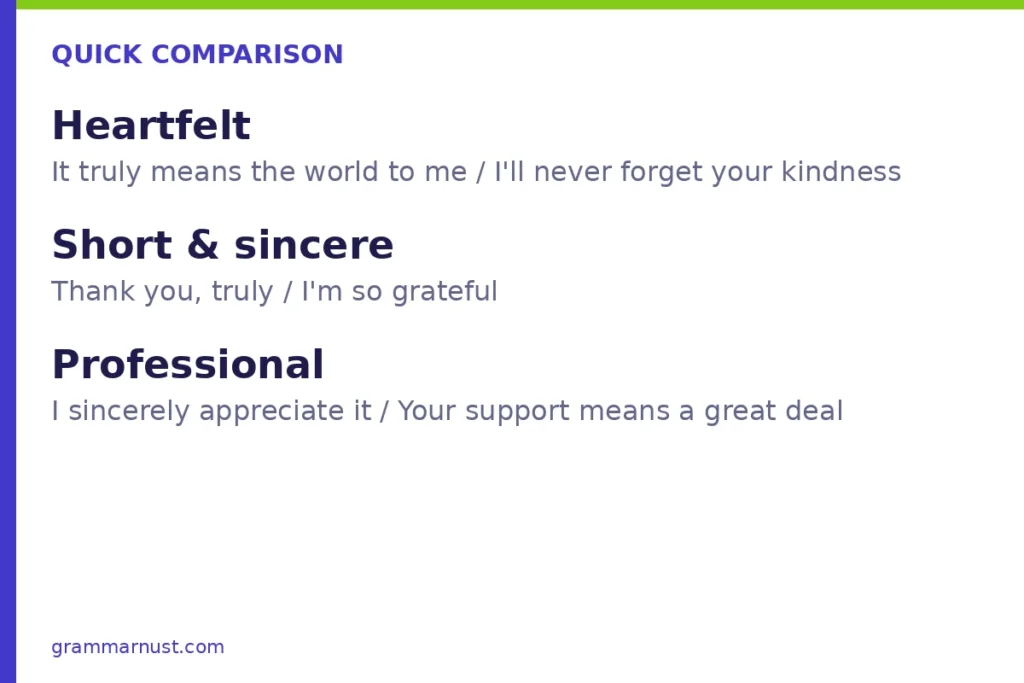
The right expression depends on the situation, your relationship with the person, and how much emotion you want to communicate. A heartfelt sentence may be perfect for a close friend, while a shorter and more polished expression may work better when communicating with a manager.
Use this table to choose an appropriate phrase for five common situations.
| Situation | Best Phrase | Why It Works |
|---|---|---|
| A friend’s support | You Have No Idea How Much This Means | Communicates personal gratitude and recognizes the emotional importance of their support. |
| A thoughtful gift | I’ll Treasure This | Shows that the gift has lasting sentimental value. |
| Kind words from a coworker | It Made My Day | Responds warmly without sounding overly personal or formal. |
| A formal email to a manager | I Sincerely Appreciate Your Support | Sounds professional while recognizing the manager’s contribution. |
| A quick text | Means So Much | Short, natural, and easy to use in informal conversations. |
You can also consider the following distinctions:
- For deep emotional appreciation: Choose “From the Bottom of My Heart” or “Words Can’t Express How Much This Means.”
- For ongoing support: Choose “Your Support Means a Great Deal to Me.”
- For unexpected kindness: Choose “I’m Overwhelmed by Your Kindness.”
- For professional recognition: Choose “I’m Honored” or “Thank You for Placing Your Confidence in Me.”
- For a meaningful compliment: Choose “You Made Me Feel Seen” or “I’ll Remember Those Words.”
When deciding between different it really means a lot to me synonyms, remember that the strongest phrase is not always the longest or most emotional one. A simple, specific sentence often communicates appreciation more effectively than an exaggerated expression.
Mistakes to Avoid When Saying “It Means a Lot to Me”
Choosing a suitable alternative is only part of expressing appreciation effectively. The wording should match the gesture, the relationship, and the reason you’re thanking someone. Avoid these common mistakes to make your message sound more genuine.
1. Stacking intensifier variations as if they were different expressions.
Changing “I’m grateful” to “I’m very grateful,” “I’m deeply grateful,” or “I’m truly grateful” does not create several genuinely different alternatives. The emotional meaning and sentence construction remain almost identical. Instead, choose a different construction that communicates a specific kind of appreciation, such as “I’ll never forget what you did for me” or “You went out of your way for me.”
2. Using deeply emotional expressions for tiny routine favors.
“From the Bottom of My Heart” is powerful, but it may sound excessive when someone simply holds the elevator or passes you a pen. For small favors, “Thanks, I appreciate it” or “You’re the best” is usually more natural. Save deeply heartfelt language for gestures that genuinely have lasting personal significance.
3. Thanking fate or luck when a specific person helped you.
If someone personally supported you, acknowledge that person rather than crediting circumstances alone. For example, saying “I got lucky” after a friend spent hours helping you prepare for an interview overlooks their effort. A better response would be “Your help made all the difference.”
This distinction also applies when choosing between person-focused appreciation and relief-focused gratitude. If a problem simply worked out, an expression such as “Thank goodness” may fit. If someone helped you solve it, recognize their contribution directly. You can explore more other ways to say “Thank God” when your intended meaning is relief rather than personal appreciation.
4. Using personal language in a formal business message.
Some expressions are better suited to friends and family than professional contacts. For example, “You’re the Best” may be perfectly appropriate when texting a close coworker but less suitable in a formal email to a client. Choose language that matches the professional relationship.
5. Forgetting to mention what you appreciate.
A general statement can sometimes feel incomplete. Instead of only writing “It means a lot to me,” explain what made the gesture meaningful. For example, “Your advice means a lot to me because it helped me make a difficult career decision.” Specific details make your appreciation more personal and believable.
If you are still unsure how to say it means a lot to me without repeating yourself, treat this guide as a phrase bank: pick another way to say it means a lot to me that matches the moment — a heartfelt line for a close friend, a polished sentence for a manager, or a three-word text when you are in a hurry — and add one specific detail about what the person actually did.

Frequently Asked Questions
How do you say “it means a lot to me” professionally in an email?
Professional alternatives include “I sincerely appreciate your support,” “Your guidance has been invaluable,” and “I’m grateful for your confidence in me.” These expressions work well when thanking managers, clients, colleagues, or business partners. For a polished email, mention the specific contribution and briefly explain how it helped you or the project.
What can I say instead of “it means a lot” in a thank-you card?
For a thank-you card, you can write “From the bottom of my heart, thank you,” “I’ll always remember your kindness,” or “Words can’t express how much this means.” Choose a phrase that reflects the gesture and your relationship with the recipient. A personal detail about why their kindness mattered can make the message even more meaningful.
What does “from the bottom of my heart” mean?
“From the bottom of my heart” means expressing something with complete sincerity and deep emotion. People commonly use it when thanking someone, apologizing, or communicating genuine affection. For example, “From the bottom of my heart, thank you for supporting me during such a difficult time” communicates more emotional depth than a routine thank-you.
How do I thank someone when words are not enough?
When words feel insufficient, combine a sincere expression with a specific acknowledgment of what the person did. You might say, “I can’t thank you enough for everything you’ve done” or “I’ll never forget how you helped me.” You can also write a personal note, offer practical support in return, or show appreciation through thoughtful actions.
Is “it means a lot to me” formal or informal?
“It means a lot to me” is generally considered a neutral expression that works in both personal and professional communication. It is polite, natural, and easy to understand. However, formal emails may benefit from more specific wording, such as “I sincerely appreciate your support” or “Your guidance has been invaluable.”
What is a short way to say “it means a lot to me” in a text?
Short alternatives include “Means so much,” “I appreciate you,” “You’re the best,” and “You came through for me.” These expressions are natural in text messages and informal conversations. Choose one that matches the situation, whether you’re thanking a friend for helping you or responding to a thoughtful message.
Conclusion
Finding the right words can make your appreciation sound more personal, genuine, and meaningful. Whether you’re thanking someone for their support, responding to a thoughtful gift, acknowledging kind words, or writing a professional email, there are many ways to communicate the same feeling without repeating one expression.
The best other ways to say it means a lot to me depend on the situation and your relationship with the recipient. Choose heartfelt expressions for meaningful gestures, polished alternatives for professional communication, and short phrases for everyday messages. Most importantly, be specific about what you appreciate so the other person understands how much their kindness truly matters.